Clothing colour guide

What Colors Suit Me for Clothes?

Find clothing colours that work with your undertone, depth and contrast. Start with the fabric comparisons below, build a small outfit palette, then use a photo preview if you want personalised direction.

Compare two fabrics in daylight rather than judging a colour in isolation
Choose a base neutral, one main colour and a small accent
Adjust colour depth and contrast as well as warm or cool undertone

Natural light photos improve result accuracy.

Your photo is used for this result, not shown publicly.

Low-quality or heavily filtered photos can reduce confidence.

Setup progress33%
1Upload photo
2Pick your look
3Generate report
Choose your result style

Pick a full analysis or a social-first card before generation.

Desired Style

Choose the overall beauty style.

Main Goal

Tell the report what to prioritize.

Makeup Intensity

Pick the makeup level you would actually wear.

How do I choose clothing colours that suit me?

Build a useful clothing palette by comparing colours near your face and choosing combinations you can repeat. Try warm and cool fabrics of similar depth, then compare lighter and darker versions of one colour. Keep the lighting consistent and look for balanced contrast rather than relying on a single vein or jewellery test. Choose a dark or medium neutral for larger pieces, an accent colour for tops and a lighter detail if it works with your features. Fabric texture and shine can change the appearance of the same colour. This guide and the seasonal library provide starting examples, not rules about what you may wear. An optional photo-based AI tool offers a free watermarked preview and a paid clean export.

How to choose clothing colours that suit you

A useful wardrobe palette works with clothes you already own. These comparisons help you narrow it down without needing a season label first.

1. Compare warm and cool fabrics

In indirect daylight, hold cream and cool white below your chin, then try peach against rose. Keep the lighting and makeup the same. Look for a more even-looking complexion and clearer features; a colour that you like on its own may behave differently near your face. Use several comparisons, since brightness can affect the result as much as temperature.
2. Match the depth and contrast of your outfit

Compare a light, medium and deep version of the same colour. If a strong black-and-white outfit dominates your face, try softer combinations such as navy with soft blue or cocoa with cream. If muted shades look flat, compare a clearer accent. Undertone alone cannot decide whether you need a soft or high-contrast palette.

3. Build three-colour outfit combinations

Start with a neutral for your largest piece, a main colour near your face and a small accent. Warm starting combinations include camel trousers, a cream top and a rust scarf; cooler alternatives include charcoal trousers, a soft blue top and a berry accent. Try the combination beside your face before treating it as a rule.

4. Test your palette with clothes you own

Repeat your strongest combinations in the same daylight and save a few reference photos. Keep useful colours even when they sit outside a suggested season. A colour you find harsh near your face can still work in trousers, shoes or a bag; scarves and necklines can make a favourite garment easier to wear.

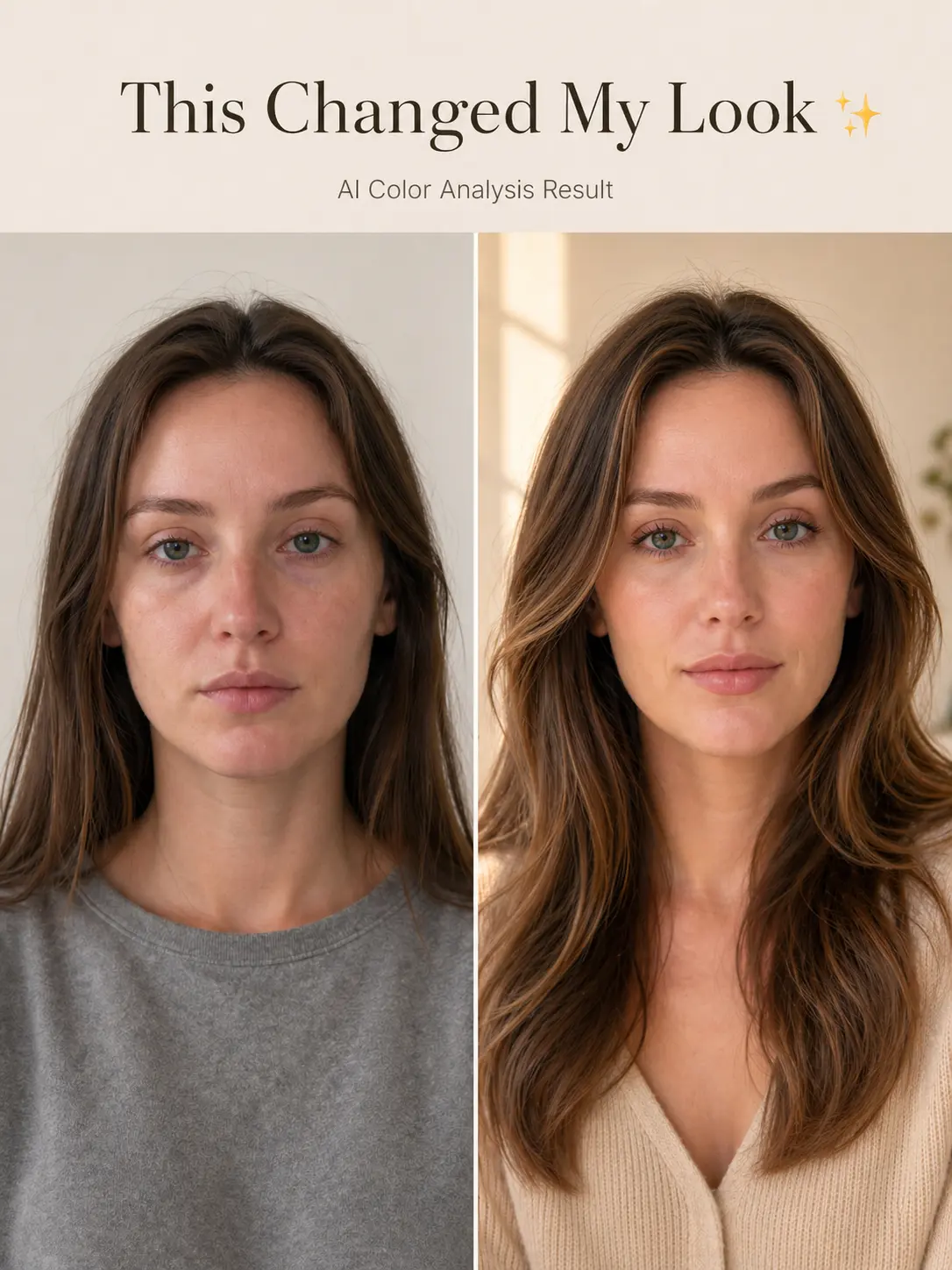
Before and after AI color analysis showing what colors suit a woman's face and improve her overall look

Before / After example

See the kind of visual change your report is built to explain

A useful color analysis should make the difference easy to see: which colors add freshness, which ones feel neutral, and which shades can make the face look dull or harsh.

Color direction

Best, neutral, and avoid colors in one visual result.

Style context

Hair and makeup notes are matched to the same uploaded face.

Preview first

Users can review a free preview before choosing HD.

Common use cases

Why people check their colors first

Use the report as a practical guide before you change your closet, makeup, or hairstyle.

1

Shopping decisions

Use the palette to narrow down clothing colors before buying.

2

Makeup matching

Check whether warm, soft, or brighter tones fit the face better.

3

Glow-up planning

Compare color, hair, and makeup direction before changing a look.