
What Lipstick Color Suits Me? Match Your Undertone
Lipstick is one of the fastest ways to see whether a color supports your face. The right shade can make your skin look clearer and your eyes brighter. The wrong shade can make your teeth look dull, your skin look red, or your face look washed out.
If you are asking "what lipstick color suits me?", do not start by copying a viral shade. Start with your natural lip color, undertone, contrast, hair color, and the clothing colors you actually wear near your face.
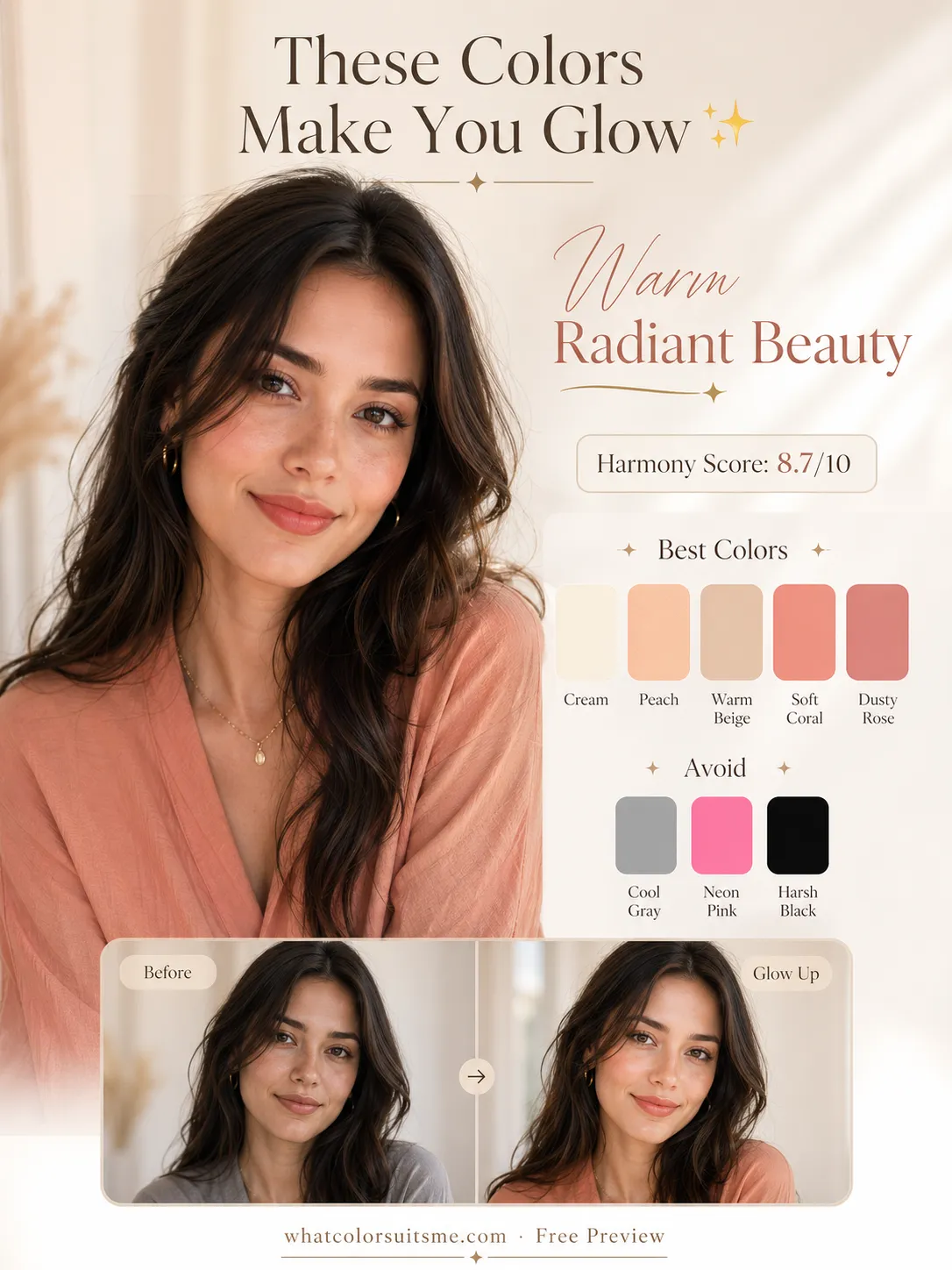
Lipstick is easiest to choose when it matches the same color direction as your clothing palette, blush, hair color, and natural contrast.
Start with undertone
Lipstick sits directly on your face, so undertone matters. But undertone is only the first filter. Your natural lip pigment, tooth brightness, hair color, and blush color can change how the same lipstick reads.
| Undertone | Lipstick families to try | Watch out for |
|---|---|---|
| Warm | peach nude, coral, tomato red, terracotta, warm rose | blue-pink, icy mauve |
| Cool | rose, berry, blue-red, plum, mauve, cool pink | orange coral, brown-orange |
| Neutral | rose beige, balanced red, soft berry, neutral nude | shades too yellow or too blue |
| Olive | muted rose, brick rose, soft terracotta, berry brown | chalky pink, neon orange |
If you do not know your undertone, read the Skin Undertone Test first.
Do a three-photo lipstick test
Before deciding a shade is "your color," test it in three quick photos:
- bare face or light makeup, in natural window light
- the lipstick with your usual blush
- the lipstick with a top color you wear often
Look for the same signals in all three photos. A good lipstick should make the face look clearer without needing heavy correction from the rest of the makeup. If it only works with a full face of makeup, it may be a special-occasion shade rather than your everyday best color.
Check contrast before choosing intensity
Undertone tells you the color direction. Contrast tells you the strength.
Low contrast features usually look better in softer lipstick: rose beige, muted peach, soft berry, or blurred red. High contrast features can often handle deeper or clearer lipstick: classic red, berry, wine, or strong rose.
If your lipstick enters the room before your face does, the shade may be too intense for your natural contrast.
Test lipstick in daylight before deciding. Store lighting can make a shade look smoother, warmer, or brighter than it will look outside.
Choose by the problem you notice
The fastest way to improve a lipstick choice is to name what looks wrong.
| What you notice | Likely issue | Try instead |
|---|---|---|
| Teeth look yellow | too orange, too beige, or too warm | cooler rose, berry, or neutral red |
| Skin looks gray | too cool, too deep, or too muted | warmer rose, peach, or softer red |
| Face looks washed out | too pale or too close to skin depth | deeper rose, berry, brick, or clear red |
| Lipstick looks separate from face | too bright for your contrast | softer stain, blurred red, muted rose |
| Redness looks stronger | shade is fighting skin redness | balanced rose, berry, or neutral nude |
This is more useful than asking whether a color is simply warm or cool.
Lipstick by seasonal color family
Seasonal analysis can make lipstick easier:
- Spring: peach, coral, warm pink, poppy, clear warm red.
- Summer: rose, mauve, soft berry, dusty pink, cool nude.
- Autumn: terracotta, brick, cinnamon, warm brown rose, deep peach.
- Winter: blue-red, berry, fuchsia, wine, cool plum.
For the full season framework, read Seasonal Color Analysis Quiz.
Use season as a range, not a command. A Winter may still need a softer berry for daytime. An Autumn may still need a cleaner terracotta instead of a brown lipstick that feels heavy.
Nude lipstick is the hardest category
Many people think nude lipstick should match their skin. That often makes lips disappear.
A better nude lipstick should relate to your natural lip color, undertone, and contrast. Warm undertones may prefer peach beige or caramel rose. Cool undertones may prefer pink beige or mauve rose. Olive undertones often need muted rose or brown-rose instead of chalky beige.
If a nude lipstick makes your mouth look gray, the shade is usually too cool or too muted. If it makes your teeth look yellow, it may be too warm, too orange, or too beige for your coloring.
The most wearable nude usually has a little life in it: rose, peach, brown-rose, muted berry, or caramel depending on your coloring. If a nude needs lip liner and gloss to look acceptable, it may not be your best nude.
Red lipstick rules
Red lipstick works best when the temperature is right.
Warm red has tomato, coral, or orange energy. Cool red has blue, berry, or cherry energy. Neutral red sits between them.
If red lipstick makes your skin look yellow, try a cooler red. If it makes your skin look gray or severe, try a warmer or softer red.
For a first red, choose the version you can wear with a simple top and normal makeup. A red that only works under evening lighting may still be useful, but it should not be your benchmark shade.
Hair color changes lipstick
Hair color changes the balance around your face.
If you darken your hair, you may be able to wear deeper lipstick. If you lighten your hair, softer lipstick may look more natural. If you choose copper, chestnut, or caramel hair, warm lipstick may become easier. If you choose ash brown or cool espresso, rose and berry shades may become easier.
For hair color decisions, read What Hair Color Suits Me.
If you recently changed hair color, retest your lipstick before buying replacements. Sometimes the old lipstick is still right, but the blush or clothing color around it needs to change.
What a lipstick result cannot guarantee
A color analysis result can narrow the color family, depth, warmth, and intensity. It cannot guarantee that every product formula will look the same.
Finish changes the result:
- matte lipstick can look deeper and more severe
- gloss can make a color look lighter and clearer
- stain can make strong colors easier to wear
- opaque nude can look heavier than a sheer nude
Skin sensitivity also matters. Stop using a product if it irritates your lips, regardless of how flattering the color is.
Common lipstick mistakes
- Testing lipstick under store lighting only.
- Judging the color on your hand instead of your lips.
- Choosing nude lipstick that is too pale.
- Wearing a color that clashes with hair color.
- Ignoring blush. Lipstick and blush should live in the same color family.
- Buying a viral shade without checking undertone.
Retake your color analysis photo if your lipstick result feels wrong and the original image used heavy makeup, yellow lighting, or a beauty filter. Makeup recommendations depend heavily on accurate lip, skin, and hair color.
Use your full palette
The best lipstick shade is easier to find when you know your full palette. Your clothing colors, hair color, blush, and lipstick should support the same direction.
Use the What Color Suits Me Quiz to find your palette, or read What Color Suits Me? for the full guide. A useful lipstick answer should leave you with a short buy list, a few avoid shades, and a reason to trust or retake the result.