
Seasonal Color Analysis Quiz: Find Your Best Palette
A seasonal color analysis quiz helps you turn vague color advice into a usable palette. Instead of guessing whether a color is flattering, you compare your undertone, contrast, depth, and brightness against seasonal color families.
The goal is not to trap you in a label. The goal is to answer practical questions: what clothing colors should you wear near your face, what lipstick shades look natural, what hair colors support your features, and what colors need more styling help.
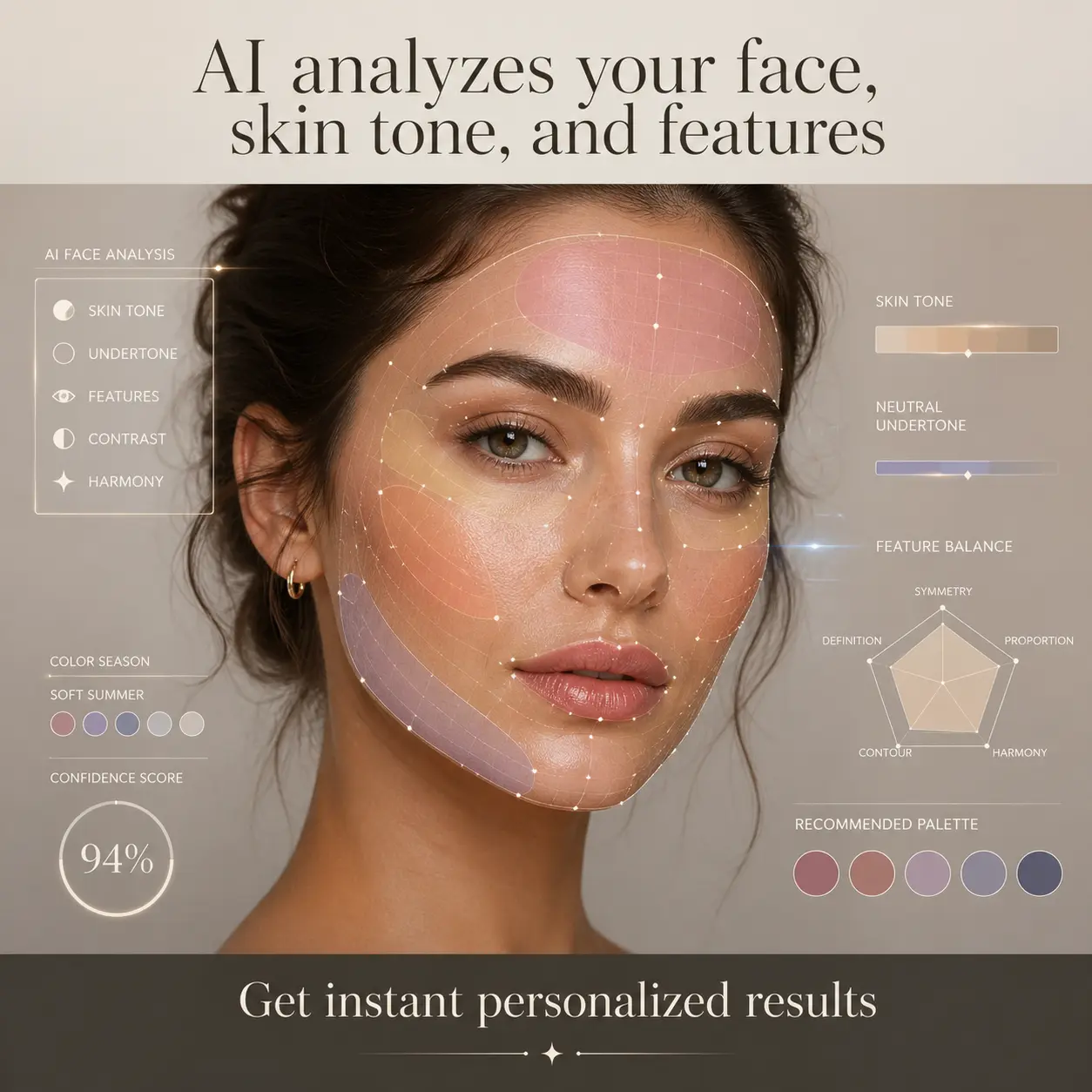
A useful quiz should turn visual clues into choices you can use: best colors, avoid colors, makeup tones, hair color direction, and confidence guidance.
What seasonal color analysis measures
Seasonal color analysis combines several visible signals:
- undertone: warm, cool, neutral, or olive
- depth: light, medium, or deep
- chroma: bright and clear vs soft and muted
- contrast: low, medium, or high
- harmony: whether colors make your face clearer or heavier
That is why two people with cool undertones may not share the same best colors. One may be Bright Winter, while another may be Soft Summer.
Before you take a seasonal quiz
Seasonal quizzes work best when you give them honest color evidence. Use a photo taken in natural window light, with no beauty filter, no colored lighting, and no heavy foundation that hides your undertone. Pull hair away from your face if it is dyed a strong color.
If your photo is blurry, backlit, overexposed, or taken under yellow bathroom light, retake it. A quiz can only be as accurate as the color information it receives.
The four main seasons
Classic seasonal color analysis starts with four families.
| Season | Temperature | Common feel | Example colors |
|---|---|---|---|
| Spring | Warm | Clear, fresh, light to bright | coral, peach, warm green, ivory |
| Summer | Cool | Soft, muted, gentle | dusty blue, mauve, rose, soft gray |
| Autumn | Warm | Rich, earthy, muted to deep | olive, rust, camel, chocolate |
| Winter | Cool | Clear, crisp, high contrast | black, white, navy, berry, emerald |
Many modern systems use 12 or 16 seasons, which split these families into more precise palettes.
How a quiz can estimate your season
A useful quiz should not ask only your favorite colors. It should test how colors interact with your face.
Good questions or photo checks include:
- Do cream or pure white look better near your face?
- Do muted colors or bright colors make your skin clearer?
- Does black look sharp or harsh?
- Do warm browns look rich or muddy?
- Do berry and blue-red shades look natural or too cool?
- Is your natural contrast low, medium, or high?
If a quiz includes photo analysis, use natural light and avoid heavy filters. Lighting quality affects color results.
The result should also explain uncertainty. If your undertone looks neutral, your contrast is medium, or your dyed hair is influencing the photo, a good result should suggest a confidence level or a retake instead of pretending every answer is certain.
12-season quick map
The 12-season system usually breaks down like this:
| Season group | Subtypes |
|---|---|
| Spring | Light Spring, Warm Spring, Bright Spring |
| Summer | Light Summer, Cool Summer, Soft Summer |
| Autumn | Soft Autumn, Warm Autumn, Deep Autumn |
| Winter | Deep Winter, Cool Winter, Bright Winter |
If you want a deeper model, read 16 Season Color Analysis.
How to read a mixed result
Many people sit near the border between seasons. That does not mean the quiz failed.
For example:
- Soft Summer and Soft Autumn can both look muted; the difference is usually cool softness vs warm softness.
- Bright Spring and Bright Winter can both handle clear color; the difference is warm clarity vs cool clarity.
- Deep Autumn and Deep Winter can both wear depth; the difference is earthy warmth vs crisp coolness.
When two results are close, test the border colors first: cream vs pure white, olive vs emerald, coral vs berry, camel vs charcoal. The side that makes your face look clearer is usually the better direction.
What each seasonal result should include
A useful seasonal color result should give more than a season name.
Look for:
- best clothing colors
- neutral colors
- colors to avoid near the face
- lipstick and blush direction
- hair color direction
- outfit color combinations
- confidence or retake suggestion
This is why a visual report is more useful than a plain sentence. A label like "Soft Autumn" is only helpful if it turns into actual shopping and styling choices.
Use the result as a map, not a rulebook
Seasonal color analysis is a decision aid. It should help you spend less time guessing, not make you afraid of color.
If a color is outside your season but you love it, wear it away from your face, soften it with a better neutral, or balance it with lipstick and blush. If a palette color looks bad on you, skip it. Not every color in a season works equally well for every person.
How seasonal analysis connects to clothing
Your best clothing colors are usually the colors worn closest to your face: tops, jackets, scarves, glasses, earrings, and hats.
For pants, bags, and shoes, you have more flexibility because they sit farther from your skin. If you want a practical clothing guide, read Best Clothing Colors for Your Skin Tone.
How seasonal analysis connects to makeup
Makeup should support your palette rather than fight it.
Warm seasons usually do better with peach, coral, terracotta, bronze, and warm brown families. Cool seasons usually do better with rose, berry, plum, taupe, navy, and cool gray families.
For lipstick specifically, read What Lipstick Color Suits Me.
How seasonal analysis connects to hair color
Hair color can shift the contrast of your face. Deepening hair can make strong palettes easier. Softening hair can make muted palettes easier.
Before a major color change, compare hair color with your undertone and seasonal direction. For a focused guide, read What Hair Color Suits Me.
Common quiz mistakes
- Choosing answers based on favorite colors.
- Using photos with strong indoor lighting.
- Ignoring natural hair and eye contrast.
- Treating the season label as a rulebook.
- Buying an entire wardrobe before testing a few colors.
Take the quiz
Use the What Color Suits Me Quiz if you want a fast starting point. If you want the broader explanation, read What Color Suits Me? next.