
Best Clothing Colors for Your Skin Tone
The best clothing colors for your skin tone are the colors that make your face look clearer, not just the colors that look good on a hanger. A shirt can be expensive and still make your skin look dull. A simple color can suddenly make your eyes brighter and your features more balanced.
The practical way to choose is not to memorize a giant palette. Start with the colors that sit near your face, test them in natural light, then build a small repeatable wardrobe from the colors that consistently make you look rested.
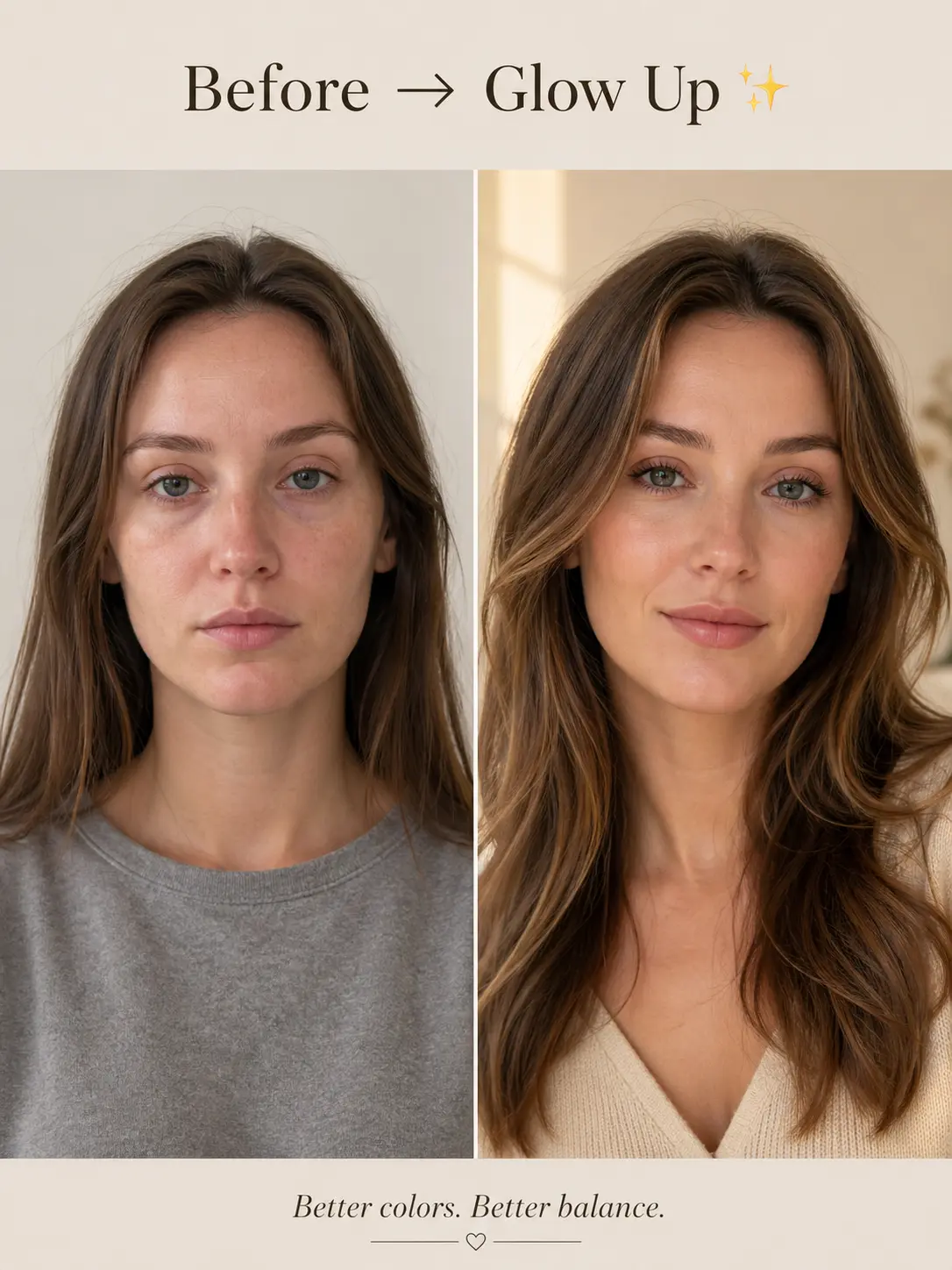
Clothing colors matter most when they sit close to the face. A useful palette should help with real tops, jackets, neutrals, and accent colors, not just color names.
Start with one outfit, not your whole closet
Trying to rebuild a wardrobe from a palette chart is how people end up overwhelmed. Test one simple outfit first:
- one white or cream top
- one dark neutral jacket
- one color near your face
- one lipstick or blush you already wear
- one piece of jewelry or glasses frame, if relevant
Take two photos by a window, one in your current favorite colors and one in the test outfit. The better clothing colors usually make your skin look smoother, your lips more alive, and the shadows under your eyes less heavy.
Put the best colors near your face
The colors with the biggest effect are:
- tops
- jackets
- scarves
- glasses
- earrings
- hats
- hair color
- lipstick and blush
Pants, shoes, and bags are more flexible because they sit farther from your skin.
That means you do not need to throw away an "avoid" color. If orange is difficult for your face, it may still work as a bag, shoe, print detail, or lower-body color.
Use undertone as the first filter
| Undertone | Clothing colors to test | Neutrals to test |
|---|---|---|
| Warm | coral, peach, tomato red, olive, terracotta | cream, camel, warm brown |
| Cool | berry, rose, blue-red, emerald, plum | soft white, navy, charcoal |
| Neutral | muted teal, balanced red, rose beige | ivory, taupe, cocoa |
| Olive | moss, deep teal, muted rose, bronze | warm gray, espresso, cream |
For a full explanation, read the Skin Undertone Test.
Use this table as a starting point, not a verdict. A warm undertone with very soft features may still need muted warmth. A cool undertone with high contrast may need stronger colors than a cool undertone with delicate contrast.
Add contrast before buying basics
Contrast decides whether your clothing should be strong or soft.
High contrast features often look good in deeper, sharper combinations like navy and white, black and ivory, emerald and charcoal, or berry and dark denim.
Low contrast features often look better in blended combinations like taupe and ivory, dusty blue and soft gray, muted rose and cocoa, or olive and cream.
Medium contrast features usually need balance: not too pale, not too harsh.
If your outfit color is technically correct but still feels flat, contrast is often the missing reason.
Pick your best neutrals first
A useful wardrobe starts with neutrals. Your best neutrals should work with your face and with each other.
| If black feels harsh | Try |
|---|---|
| Too sharp | espresso, charcoal, deep navy |
| Too heavy | soft navy, cocoa, warm gray |
| Too flat | deep teal, chocolate, plum-brown |
| If white feels harsh | Try |
|---|---|
| Too icy | ivory, cream |
| Too bright | soft white, bone |
| Too yellow | cool white, light gray |
Do this before buying statement colors. A wardrobe with the right navy, cream, gray, brown, or black alternative is easier to wear every week.
Build three outfit formulas
Once you know a few promising colors, turn them into outfits you can actually repeat.
| Formula | Works well when | Example |
|---|---|---|
| Soft neutral + gentle color | your face is low contrast or muted | taupe knit + dusty blue scarf |
| Deep neutral + clear color | your face has stronger contrast | navy blazer + berry top |
| Warm neutral + warm accent | your skin brightens in warmth | camel jacket + coral tee |
| Cool neutral + cool accent | orange tones make you look tired | charcoal cardigan + rose top |
This is more useful than a huge list of "good colors" because it tells you how to shop.
Use accent colors strategically
Accent colors are the colors that make outfits feel intentional: lipstick, scarves, sweaters, tops, and accessories.
Warm accents include coral, peach, terracotta, tomato red, olive, bronze, and golden yellow. Cool accents include berry, rose, plum, blue-red, emerald, lavender, and icy pink.
If you are not sure which side you need, compare What Color Suits Me? with a photo-based quiz.
Seasonal clothing examples
| Season direction | Clothing colors that often work |
|---|---|
| Spring | ivory, coral, peach, warm green, clear aqua |
| Summer | soft white, dusty blue, mauve, rose, soft navy |
| Autumn | camel, olive, rust, chocolate, cream |
| Winter | black, white, navy, emerald, berry, blue-red |
For a more structured approach, use the Seasonal Color Analysis Quiz.
Avoid colors are not banned colors
Avoid colors are simply colors that need more support. You can still wear them away from your face, as pants or bags, or with makeup that balances the effect.
For example, if stark black washes you out, wear it as pants instead of a turtleneck. If orange makes your skin look red, wear it in a print or accessory instead of a full top.
If a color makes you look tired in one photo but fine in another, check the lighting before blaming the color. Yellow indoor light, phone filters, and heavy makeup can change the result.
Common shopping mistakes
- Buying colors because they are trending.
- Choosing neutrals that do not match your undertone.
- Wearing your worst colors directly under your face.
- Ignoring lipstick and hair color.
- Treating a seasonal label as a rule instead of a guide.
- Buying a full palette before testing 3-5 colors.
Build a simple wardrobe palette
Start with:
- 2 best neutrals
- 3 best colors
- 1 power color
- 1 avoid color to keep away from your face
- 1 lipstick or blush direction
This is easier than trying to memorize every color in a seasonal palette.
Retake your test photos if the first set is low quality, backlit, heavily filtered, or taken under warm bathroom light. Color analysis is more reliable when the photo shows your real skin, eyes, lips, and hair in soft natural light.
Use the What Color Suits Me Quiz, then connect the result to What Hair Color Suits Me and What Lipstick Color Suits Me.